Skip to content

Need an immigration specialist? We can help YOU!
There are many reasons why people wish to apply for a visa to enter the UK, they include work, study, doing business, joining immediate relatives, visiting as a tourist, transit through the country, accessing private medical treatment, seeking refuge, and to live in the UK permanently.
As part of our team, we are able to bring together immigration barristers and UK accounting experts with the most relevant legal experience to position our clients for long-term success. Part of our team is based in the heart of London, they provide expert legal advice and representation, directly to individuals and businesses, in relation to all aspects of UK immigration law and UK Tax. HTJ combines the expertise and quality of the Bar, with the service levels of a trusted tax firm.
A UK Visa is a document that will give you a right to enter the UK, whether you wish to come to the United Kingdom on a temporary basis or wish to make the country your permanent home by gaining settlement status, your visa will be a key part of your UK immigration journey.
All overseas nationals must apply for a visa to enter the UK if they intend to stay for more than 90 days. Non-EEA nationals must also apply for a visitor visa if their stay is less than 90 days whilst citizens from EEA countries can enter the country for up to 90 days without the need for a visa.
There are a wide variety of UK visas available including both short-term to long-term UK visas, the right one for you will depend on why you intend to enter and how long you plan to stay in the UK.
The visa types available include work visas, study visas, family visas, tourist visas, business visas and transit visas. Many of the UK visas can also be used as a route to Indefinite Leave to Remain, which is a key step in the journey to British citizenship.
You can apply for a UK visa by completing the relevant application forms online, all of the applications are available on the UK government website. As part of your application, you will also need to submit a number of supporting documents to prove that you meet the eligibility requirements for the visa that you are applying for.
The UK’s new points-based system requires you to score a certain number of points for each visa to be eligible and you will need to prove that you can do this.
UK Visa Types
UK Work Visas
If you intend to work whilst living in the UK, then you must hold a visa that permits you to do this. The UK work visas include:
- Skilled Worker Visa
- Temporary Worker Visa
- Youth Mobility Scheme Visa
- Paid Permitted Engagement Visa
- Sportsperson on Visa
- Minister of Religion Visa
- Intra-Company Transfer Visa
- High Potential Individual Visa
The most common UK work visa for overseas nationals is the Skilled Worker Visa. Previously known as the Tier 2 Visa, this visa allows international workers to take up employment in the UK for up to 5 years and can also be extended after this. To be eligible under the points-based system you must score at least 70 points.
You can do this by having a job offer and Certificate of Sponsorship from a registered UK sponsor company, demonstrating a knowledge of the English language and meeting the relevant salary requirements for your role.
There are also a number of business visas suitable for entrepreneurs who may wish to enter the UK, they include the:
- Innovator Visa
- Investor Visa
- Startup Visa
- Business Visitor Visa
Visas to study in the United Kingdom
The UK is home to many world-class educational institutions, which makes it a popular destination for international students. Before entering the UK, overseas nationals must secure a visa that permits them to study in the UK.
The UK Student Visa, previously known as the Tier 4 Visa, permits students to stay in the UK for the duration of their studies. To be eligible you must have the offer to study on a course from a registered UK educational facility. You will also need to demonstrate your knowledge of the English language and will need to prove that you are able to support yourself financially without the use of public funds.
There are also other types of student visas available. The Short-Term Study Visa is available to those intending to study in the UK for 6 months or less, for example as part of an exchange program. For younger students, there is also a Child Student Visa. This if for children between the ages of 4 to 17 who will study in the UK for over 6 months.
UK Visitor Visa
Non-EEA citizens will require a visitor visa if they inAtend to enAter the UK for a period of six months or less. The standard UK Visitor Visa can be used for a number of purposes including:
- Visiting friends and relatives
- Staying in the UK as a tourist
- Accessing private medical treatment
There are also other types of visitor visas that may be more suitable for you. The Short-Term Study Visa is a student visitor visa that allows people to study in the country temporarily.
The Business Visitor Visa allows foreign nationals to enter the UK temporarily to carry out business activities.
Visitor visas are issued for a period of six months and cannot be extended. However, visitors from the United States, China, Pakistan, India, and other non-EEA countries can, however, apply for a long-term visit visa for UK travel. These are available at an extra cost and can be held for a duration of two years, five years or ten years. The long-term visitor visa still restricts you to a maximum single visit of six months or less.
Family visas
Being apart from your immediate relatives can be difficult, luckily there are several types of UK Visas that can be used for the purpose of family reunions. You could be eligible for a family permit if one of the following applies to you:
- Your family member/spouse is a British Citizen
- Your family member/spouse has ILR of settled status
- You have an eligible relationship with an individual in the UK with refugee status or humanitarian protection
The Child dependent visa allows you to bring your children to join you in the UK, and the Adult dependent visa allows you to bring an adult relative who requires care in the UK to join you here. If you wish to join your partner in the UK, you will need to apply for one of the partner visas. They include the Spouse Visa for those who are married to a British citizen or settled person, the Unmarried Partner Visa for those in a civil partnership with a British citizen or settled person or the Fiancé Visa for those who intend to marry a British partner or register a civil partnership during their stay in the UK.
UK Expansion Worker visa (Global Business Mobility)
A UK Expansion Worker visa allows you to come to the UK to set up a branch of an overseas business that has not started trading in the UK yet.
You must already work for the overseas business as either a senior manager or specialist employee.
To be eligible for a UK Expansion Worker visa you need to:
- have a valid certificate of sponsorship from your employer
- have worked for your employer outside the UK
- do a job that’s on the list of eligible occupations
- be paid the minimum eligible salary required for your job
The specific eligibility depends on your job.
You can stay in the UK with a UK Expansion Worker visa for whichever is shorter of:
- 12 months after the start date of the job on your certificate of sponsorship
- the time given on your certificate of sponsorship plus 14 days
If you want to stay longer in the UK, you can extend your visa by 12 months. The maximum time you can stay in the UK on a UK Expansion Worker visa is 2 years.
If you’ve spent time in the UK on this or another visa, you might not be able to stay on a UK Expansion Worker visa for as long. You can only stay in the UK for a maximum of 5 years in any 6 year period if you’ve spent time on any of these visas:
- Intra-company Graduate Trainee visa
- Intra-company Transfer visa
- Graduate Trainee visa (Global Business Mobility)
- Secondment Worker visa (Global Business Mobility)
- Senior or Specialist Worker visa (Global Business Mobility)
- Service Supplier visa (Global Business Mobility)
- UK Expansion Worker visa (Global Business Mobility)
Scale-up Worker visa
A Scale-up Worker visa allows you to come to the UK to do an eligible job for a fast-growing UK business (sometimes called a ‘scale-up business’).
Your UK employer must meet specific eligibility criteria to sponsor scale-up workers.
To qualify for a Scale-up Worker visa, you must:
- have a confirmed job offer to work for an approved scale-up business for at least 6 months
- have a ‘certificate of sponsorship’ from your employer with information about the role you’ve been offered in the UK
- have a job offer to do a job that’s on the list of eligible occupations
- be paid a minimum salary in your new job
You can stay in the UK with a Scale-up Worker visa for 2 years. You’ll need to apply to extend your visa when it expires.
You can extend your visa as many times as you like by 3 years, as long as you still meet the eligibility requirements.
After 5 years, you may be able to apply to settle permanently in the UK (also known as ‘indefinite leave to remain’). This gives you the right to live, work and study here for as long as you like, and apply for benefits if you’re eligible.
Graduate visa
A Graduate visa gives you permission to stay in the UK for at least 2 years after successfully completing a course in the UK.
You must be in the UK when you apply.
You can apply for a Graduate visa if all of the following are true:
- you’re in the UK
- your current visa is a Student visa or Tier 4 (General) student visa
- you studied a UK bachelor’s degree, postgraduate degree or other eligible course for a minimum period of time with your Student visa or Tier 4 (General) student visa
- your education provider (such as your university or college) has told the Home Office you’ve successfully completed your course
You can ask your education provider if you’re not sure whether they’ve told the Home Office you’ve successfully completed your course.
A Graduate visa lasts for 2 years. If you have a PHD or other doctoral qualification, it will last for 3 years.
Your visa will start from the day your application is approved.
If you want to stay longer in the UK. You cannot extend your Graduate visa. However, you may be able to switch to a different visa, for example a Skilled Worker visa.
Global Talent visa
You can apply for a Global Talent visa to work in the UK if you’re a leader or potential leader in one of the following fields:
- academia or research
- arts and culture
- digital technology
You must also be at least 18 years old.
You can live and work in the UK for up to 5 years at a time.
There’s no limit to how long you can stay in the UK in total, but you will need to renew (‘extend’) your visa when it expires. Each extension can last from 1 to 5 years – you choose how long you want the extension to be.
You may be able to get indefinite leave to remain so you can settle in the UK after 3 or 5 years, depending on which field you work in and how you apply. This gives you the right to live, work and study here for as long as you like, and apply for benefits if you’re eligible.
Start-up visa
You can apply for a Start-up visa if:
- you want to set up an innovative business in the UK – it must be something that’s different from anything else on the market
- you meet the other eligibility requirements
You must be endorsed by an authorised body that is either:
- a UK higher education institution
- a business organisation with a history of supporting UK entrepreneurs
You must be able to show that your business idea is:
- a new idea – you cannot join in a business that is already trading
- innovative – you must have an original business idea which is different from anything else on the market
- viable – it has potential for growth
You can stay for 2 years if you either:
- come to the UK on a Start-up visa
- switch to this visa from another visa while in the UK
You cannot apply to extend this visa.
You may be able to switch to an Innovator visa if you set up a business while on a Start-up visa and:
- your endorsing body assessed and agreed it
- it is active, trading and sustainable
- you have day to day involvement in it
Your visa may be cut short if your endorsement is withdrawn by the endorsing body. If you want to stay longer, you must re-apply with a new endorsement before your current visa expires.
You can only stay for a total of 2 years even if you’re granted a new visa with a new endorsement.
How we can HELP?
UK visas and immigration is complex, so it can be difficult to navigate the visa application process by yourself. If you make a mistake in your application, UK Visas and Immigration may refuse it. Therefore, it is highly recommended that you seek the complete assistance of a professional.
We offer application packages that will see you assigned a caseworker who can discuss your situation with you, as well as a range of bespoke services, find out what you are trying to achieve, and can advise you on the most viable UK immigration options available to you. During a professional legal advice session, your caseworker can also assess that you meet the eligibility criteria for the UK visa route that you wish to apply for.

Get your business off to the best start!
Digital Company Formation
The Digital company Formation Pack includes all of the essentials you need to form a limited company that is ready to trade.
Who Is The Digital Company Formation Pack Designed For?
This company formation pack is ideal for someone who is looking to form a Limited Company without any additional extras. It is also suitable for clients looking to reserve a company name for future use.
An Affordable Way to Create A Limited Company
This company formation package represents excellent value for money. If you need help or advice please contact us today.
Privacy Company Registration
You can create a company with a Central London address. When you form a business with the Privacy Pack, you will receive professionally printed hard copies of your company incorporation documents, as well as official PDF digital copies.
Who Is The Privacy Company Registration Pack Designed For?
The Privacy Pack is designed for those who are looking to form a business with a prestigious Central London address. Your company and address will impress clients, whilst keeping your home address private and off the public record.
Affordable Company Formation
We’ve created this package to offer unrivaled value for money. In total, you can save over £100 compared to purchasing each individual service separately.
Fully Inclusive Company Registration
Professionals looking to create a limited company should opt for the Fully Inclusive Company Registration Pack. It is our premier business package, containing everything necessary to set up and trade as a company. The main focus on of the Fully Inclusive Company Registration Pack is the full presence in Central London.
Who Is The Pack Designed For?
This company formation pack is aimed at those who are looking to form a company with stature. If you will frequently be dealing with clients and suppliers, a London address is often preferable. It also offers privacy by keeping your home address off the public record.
How Long Does It Take To Form A Company?
We’ve streamlined our company formation process as much as possible, meaning you can create a company in only a few minutes. We do not require any documents or signatures from you, and we send all applications direct to Companies House. It usually takes days to form the company once the forms have been submitted, but this can vary depending on workloads.
International package
Entrepreneurs from outside the U.K. can still take advantage of our professional business services. This formation package will help your business gain a strong foothold inside the UK.
Who Is The Pack Designed For?
This company formation pack is ideally suited to clients who are based outside of the UK. It is ideal if you are looking to impress clients with a prestigious London address. The pack includes everything a Non-resident requires in order to get off to the best possible start when trading with the UK.
What Do I Need To Do, How Long Does It Take?
Our formation process is straightforward, and the application takes no longer than a few minutes. We do not require any documents from you in order to process your company formation. Generally, Companies House will form the company within one to two days, but this can vary depending on their workload.
Limited Liability Partnership Company
The LLP is a relatively recent innovation in the business world. It is the latest type of business vehicle to be introduced after having received official Royal Assent in 2000. It can be loosely described as a hybrid between a limited liability company and a traditional self-employment partnership. It offers the limited liability available to owners of limited companies combined with the tax regime and flexibility available to partnerships.
Right to Manage Company Online
A Right to Manage company is a legal entity that tenants can use when they want to take over the management of the building they occupy from the current landlord.
For This To Happen:
- at least 50% of your fellow tenants must agree to go through the processes,
- no more than a quarter of the building as a whole can be used for non-residential purposes (excluding common areas, stairs, halls, and car parks), and
- at least 66% of the owners with leases must have at least 21 years left on their lease.
Prior to incorporating your right to manage company, you’ll need to have consulted with a solicitor on recompensing the reasonable legal costs of the freeholder of the building or have had your case adjudicated on at the First Tier Property Tribunal. It can take up to 9 months from the engagement of your solicitor until the point at which your Right to Manage limited company takes over the building’s management.
Your Company Formations helps you and your fellow tenants at the end of the process of assuming management of the property by forming your Right to Manage limited company. We do not provide advice during the process – you are strongly advised to use an experienced solicitor.
Please note that Right to Manage companies cannot acquire or own the building in which you are a tenant. If you wish to incorporate a company for that purpose, you will need to incorporate a property management company.
Limited By Guarantee Company Online
Companies limited by guarantee are often social enterprises – bodies like membership organizations, worker co-operatives, sports clubs, and community centres. They’re a different type of limited company offering their shareholders limited financial exposure and liability in the event that their enterprise enters insolvency. Unlike a standard limited company, there are no shareholders or shares – there are guarantors who agree in advance to pay up to an agreement amount towards company liabilities.
Again, unlike a standard limited company, profits are not generally distributed to the shareholders because any surplus funds should be re-invested to help the company achieve its social or other aims. Guarantors are legally entitled to take profits from the limited company but, if they do so, the company will lose its right to be considered as a not-for-profit enterprise.
As with a standard limited company, a company limited by guarantee has its own legal identity and the personal finances of its guarantors are protected because of the pre-agreed limit of liability put in place at formation and from that point onward.
Your Company Formations has been involved in the successful setting up of hundreds of companies limited by guarantee. Our team of experienced staff will work with from you right from the initial set-up through to the point of establishment of your company limited by guarantee and beyond.
Companies limited by guarantee are not a suitable legal vehicle for the formation of a charitable company.
Property Management Company Online
The types of property most often bought by property management companies are commercial properties, blocks of flats, or housing estates which are divided into units. Each of these units is normally owned by a company or a person who may trade or live in that unit or lease/rent it out.
Property management companies also take responsibility for the repair and maintenance of property and land – “the facilities”. These responsibilities include but are not limited to cleaning costs, decoration of common areas, grounds maintenance, garden maintenance, caretaking, security, roof repairs, gutter repairs, lifts maintenance, and more. Property management companies are responsible for paying insurance, rates, and other taxes.
Property management companies do not always buy the freehold from a landlord – they sometimes purchase the head lease instead. The company then issues sub-leases to unit holders who pay the property management company for the provision of services. In this situation, the head lease holder is still responsible to the freehold owner of the building and/or land.
Your property management company may be either a company limited by guarantee (not for profit) or a company limited by shares (allowing profits to be distributed to the shareholders). With these packages you will be required to upload your own articles of association.
Charity Company Online
Every year in the UK, more and more charitable companies limited by guarantee are incorporated because of the flexibility the structure offers over the alternative charitable trust, charitable incorporated organization, and community interest company models.
Your Company Formations has considerable experience to offer clients wishing to set up charitable companies limited by guarantee. We can provide you with model articles which you can amend to meet the guidelines required to be considered as a charitable company. Alternatively, if you have worked with a solicitor to draw up bespoke Articles for your charitable company, we can file them on your behalf during the incorporation process
UK PLC Company Online
Register a Public Limited Company. Although most commonly associated with companies listed on the stock market, there are a number of distinct reasons why many directors and shareholders choose to their set up a plc from scratch or to convert their limited company into a plc.
In the way that, in the minds of many, a limited company has more prestige and feels more secure and stable than an unincorporated sole trader or partnership, additional credibility and respect is lent to a company with the abbreviation “plc” after its name.

Company Registered Office Address
A registered office is a legal requirement for all companies registered at Companies House. It is the official address of the incorporated company and is publicly available for anyone to view. The address can be different from that of your usual trading address. Companies House, HMRC, and other government bodies will use your registered office address to deliver statutory letters and legal notices. All companies are legally required to display the registered office address on business correspondence such as letters and the business website.
A registered office address must be in the same UK country/jurisdiction where the company is registered (England and Wales, Scotland, or Northern Ireland). However, it does not need to be in the same country where the business carries out its main trading activities.
Please note:
- If you wish to use this address for more than one company, a registered office service should be purchased for each company.
- Official government mail is classified as mail from all UK government bodies and court documents.
The Benefits of Our Service
By choosing our registered office address service, you can give your business a sought-after London address while at the same time protecting your identity. The address is located in the heart of Central London and is a prime location to help boost your business profile. By using our registered office address at Companies House, you can increase confidence in your brand with clients and suppliers. Our service is also private and confidential, helping you secure your details at an affordable price.
Director Service Address
If you are a director and want to protect your privacy, simply use our Director Service Address and keep your personal address off public records.
During any UK company formation, you will be legally required to supply the director’s usual residential address and a director service address. The Director Residential address will be protected and not displayed publicly. However, the Director Service address is a publicly available address that any member of the public can find on Companies House or by performing a google search.
Keep your work and home lives separate and protects your privacy by ensuring your residential address stays off the public record with our Director Service Address. This avoids clients or suppliers from discovering your home address, as well as spam mail or unwanted visitors turning up at your home.
Advantages of a director’s service address:
- Hide your residential address from the internet, marketing agencies, and the public
- Protect your home address from being displayed on the public register
- Protect yourself from being a victim of identity fraud
- Prevent unsolicited letters from marketing agencies
- Prevent customers or visitors from arriving at your home address
- Receive a prestigious London company address that will enhance your professional image
Who can use our director’s service address?
- UK company directors
- Company secretaries
- LLP members
- Shareholders
- Subscribers (shareholders or guarantors at the time of the company’s incorporation)
- Persons with Significant Control (PSCs — shareholders who own more than 25% of all shares)
We partner with the best businesses to offer great benefits...
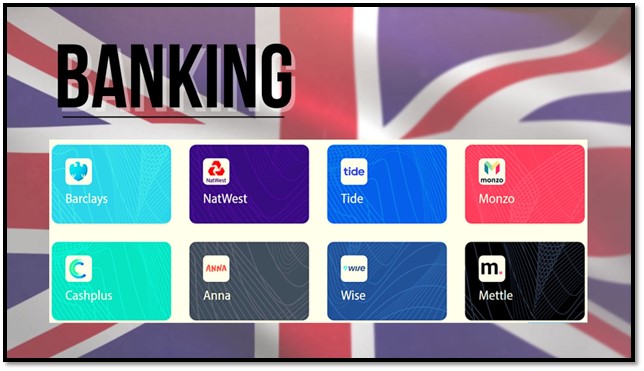
Bank Accounts
There is no legal requirement for a UK company to open a bank account, but it would be very unusual for a company not to, if it is active. A UK company can have as many bank accounts as the directors decide to open, and these can be inside or outside the UK. There are no currency controls in the UK so money can pass freely between international accounts. There are however money laundering regulations in the UK so it is important to be able to account for the source of all funds brought into the UK.
NatWest start up business account
NatWest has been supporting businesses, like yours, for more than 50 years. Their application process can take as little as 10 minutes. Zero transaction fees for your first 18 months (Standard Tariff then applies). Get access to borrowing options if required (subject to status).
Application process
NatWest has been supporting businesses, like yours, for more than 50 years. Their application process can take as little as 10 minutes. Zero transaction fees for your first 18 months (Standard Tariff then applies). Get access to borrowing options if required (subject to status).
Barclays business bank account
Receive 12 months’ worth of free business banking from this high-street bank. Manage your business account online using the Barclays App, and make payments at home and abroad with free invoicing. Gain access to the Business Direct Team to obtain advice and support to help you grow your business.
Application process
Once your company is formed, complete a simple online application form and your bank account will be open within 5 working days. You will receive your business debit card within 5 days of your account opening.
Tide business current account
Manage all of your company’s financial administration in one place, with accounting and invoicing all taken care of via their business account App. Includes integration with Xero, Quickbooks, Sage and more.
Application process
Once your company has been formed, complete a brief online application form and your account will be opened within an hour. Your free business Mastercard will be sent to you once your account has been opened.
Monzo business bank account
Voted the 2022 Best Business Banking Provider at the British Bank Awards. Get free, instant UK bank transfers, FSCS protection, instant spending notifications, Pots for separating your money, and much more. Starting at no monthly fees.
Application process
Monzo will email you within 24 hours of your company being formed. This will enable you to start the online account opening process.
Cashplus business current account
This online bank account comes with a business Mastercard, business expense cards and award-winning App. Also provides a business overdraft facility of up to £2,000, as well as the ability to set up direct debits and make purchases for free.
Application process
With no credit checks, complete a simple online application form once your company has been formed, and your UK bank account and sort code will be sent to you within 5 minutes. Your business Mastercard will arrive 3 to 5 working days after your account has opened.
ANNA business bank account
An online banking solution that allows you to provide your co-workers with their own debit cards and spending limits. Set up direct debits, carry out money transfers and ATM transactions for free, and earn 1% cashback when you use your business debit card for business expenses.
Application process
Once your company has been formed, ANNA will send you an email and SMS to allow you to start your online application. You can have your account open in as little as 3 minutes, and your business debit card will arrive within 5 working days of your account being opened.
Wise UK Business Banking
This online banking solution provides UK, EU and US bank accounts, allowing you to send money to 70+ countries and receive and hold over 50 currencies.
Application process
Once your company has been formed, complete a short online application form and your bank account will be opened within a few working days. There is a one-off fee of £45.00 to access your international account details.
Mettle business bank account
Mettle provide an online banking solution from NatWest. This business bank account comes with a handy App which allows you to add your business logo to invoices, and add receipts to payments. Lock and unlock your business Mastercard whenever you wish using the App.
Application process
Once your company is formed, complete a quick online application form and your bank account will be open within a few minutes. You will receive your business Mastercard a few days after your account has been opened.

Taxes and annual accounts can be complex and time-consuming, so sit back and spend that valuable time growing your business while leaving the accounting to our experts.
We offer a hassle-free accountancy service for limited companies in the UK. A core accountancy service is not just about producing paperwork and filing it with the relevant authorities. Once you start using our service, you can ask us ongoing questions and we can provide professional tax advice whenever you need it.
It’s our goal to be as useful as possible to you as you embark on your journey of becoming a company director.
Our core accountancy service includes filing of all company accounts and tax returns as standard. However, we also include many other services at no extra cost, representing excellent value for money.
Corporation Tax
UK companies pay UK corporation tax on their profits. With the rate of corporation tax being as low as 19%, and about to become even lower, the UK is a very attractive tax jurisdiction for companies most UK companies pay their corporation tax 9 months after their accounting year end. Some larger companies are required to make quarterly payments on account.
Reporting to Companies House
Companies House is the government office where companies are incorporated, and where company secretarial forms and accounts are filed. Documents filed at Companies House are available for public inspection (in most cases for a very small fee), and these are most commonly accessed online.
- Accounts – A company’s annual accounts must be filed at Companies House. For most private companies, other than thoseabove a certain size, less detailed accounts can be filed, ratherthan fuller accounts, although it is still necessary to have fulleraccounts prepared for the tax authorities. Glazers submits clients’accounts on their behalf once the accounts have been finalizedand signed each year.
- Confirmation Statement – Every company must submit a Confirmation Statement to Companies House annually. Although it is the responsibility of the company’s directors (and the company secretary, if there is one) to deal with company secretarial matters, Glazers handles the Confirmation Statement on behalf of most of our clients. The form is normally filed electronically at Companies House.
- Notifying Changes – There are numerous forms for notifying Companies House of changes that may take place from time to time, such as appointment of directors, termination of directors, changes in address for the company or directors, share issues and changes relating to “People With Significant Control.” Glazers normally handles these forms as part of our company secretarial support service to clients.
Reporting to HM Revenue & Customs (HMRC)
HMRC administers all taxes in the UK, including corporation tax, VAT and PAYE (Pay As You Earn).
- Corporation Tax Return and Accounts – The corporation tax return is prepared using the figures in the company’s accounts, and filed electronically at HMRC each year, together with a copy of the full accounts. This is handled by Glazers on behalf of our clients.
- VAT Returns – Companies that are registered for VAT need to file VAT returns with HMRC. These are most commonly filed every three months, though a company can opt to file these monthly or annually, which is appropriate in certain cases. This is a service that Glazers carries out for many of our clients, though some companies file their own returns.
- PAYE and NI Returns – PAYE is a system of deducting tax payments from salaries paid by an employer to its directors and employees. Any company that operates a payroll must file monthly PAYE returns. These returns also include NI contributions. Glazers offers a comprehensive payroll service to take care of everything.
- P11D Forms – Companies that provide benefits in kind, or reimburse expenses to its directors or employees, are required to report these details to HMRC each year. Glazers’ tax department will prepare and submit these forms on your behalf.

VAT Registration
Once you register a company, you can complete your VAT registration online via our simple process. We offer a comprehensive VAT registration service that allows you to register your UK limited company for VAT with ease. We will take care of the paperwork and forms and complete the entire VAT registration process on your behalf before obtaining your VAT registration certificate, usually within 14 days of application.
Once your VAT registration process is complete, you will receive:
- A VAT registration number for your business
- Details of when to submit your first VAT return and payment
- Your company’s “effective date of VAT registration”. This is the date you reached the VAT threshold of £85,000 turnover or more or the date you voluntarily applied.
You can then start charging for VAT along with your products or services.
What’s included in our VAT registration service?
Once you make your payment for our VAT registration online service, our team will contact you and:
- Get all the required information to file your company for VAT registration online
- Fill the required forms and paperwork
- Submit your VAT registration to HMRC on your behalf
- Ensure all the required procedures are followed to get your unique VAT registration number.
What are the advantages of voluntary VAT registration?
- VAT-registered companies benefit from increased trust among suppliers and customers and enhance their credibility
- VAT registration gives an impression of a well-established company. This is particularly useful for new businesses
- VAT registered companies can reclaim VAT on purchases
- VAT registered companies can charge VAT on products or services
PAYE Registration
When you’ve registered a company name, you may want to register for Pay as You Earn (PAYE). Whether or not you’ve had a recent change of company director, when you sign up for PAYE, the director may take a salary, of which £8,632 is completely taxes and national insurance-free (provided the director receives no additional income from other sources). For all the necessary information on how to set up PAYE, we can help!
Do I have to set up a proper payroll to get my full tax-free salary?
Yes. HMRC operates a real-time information system where your and your employees’ salaries must be disclosed.
Do I need to submit a monthly payroll?
No. The annual scheme allows a company to submit an annual payroll and for a director to take their salary in one month. This is particularly useful for small companies where the directors are the only employees and are taking small salaries. By submitting payroll annually, a director can save valuable time and cut down on administrative tasks.
How do I set up payroll?
To set up a payroll, you have two options. You can apply to HMRC directly or we can set it up on your behalf.
As soon as payroll registration is complete, HMRC will expect regular submissions (either monthly or annually).
Please note that if you want to run an annual payroll, you must notify HMRC or you run the risk of fines for non-submission. When setting up your payroll, we can inform HMRC of how you’d like to disclose your and your employees’ salaries.
Appointing HTJ.TAX as Your Company Accountants is straightforward!
- First, you get in touch with us by phone, email, or through one of the contact forms on our website – WWW.HTJ.TAX
- We will give you a quote for our services based on the information you provide us with. We will also offer you a free, no-obligation meeting if you are able to meet us face-to-face, or a Zoom video conference if that is more convenient. Assuming you’re happy with our quote, you just give us the go-ahead.
- We’ll then send you a letter of engagement to sign, with our terms of business, and we’ll deal with any other necessary formalities.