

Which Is the Best? Singapore vs Hong Kong vs Malaysia

On this page
- Singapore: General Rule for Foreign-Sourced Income
- Core Principle of Taxing Foreign Income in SG, HK & MY
- When Is Overseas Employment Income Taxable in Singapore?
- Is Remote Work for a US Company Taxable in Singapore?
- Is Overseas Business Travel Income Taxable in Singapore?
- Are US Dividends Taxable in Singapore?
- What Does “Received in Singapore” Mean for Foreign Income?
- How to Claim Foreign Tax Credits in Singapore
- Are Offshore Dividends Taxable in Hong Kong?
- Understanding Hong Kong’s FSIE Regime
- Hong Kong FSIE: What Does It Cover?
- Who Does Hong Kong’s FSIE Regime Apply To?
- Malaysia Tax on US Stock Capital Gains
- Hong Kong FSIE: Covered Types of Foreign Income
- Malaysia’s Three-Tier Foreign Income Tax System
- Hong Kong FSIE: Main Routes to Exemption
- When Are Directors’ Fees Taxable in Singapore?
- What Does Participation Exemption Mean Under Hong Kong FSIE?
- How Does Malaysia Source Employment Income?
- What Is the Nexus Requirement for IP Income in Hong Kong?
- Are Labuan Companies Subject to Malaysia’s Remittance Rules?
- Which Entities Are Excluded from Hong Kong’s FSIE Regime?
- Is London Rental Income Taxable in Hong Kong?
- How Did Malaysia’s Foreign Income Tax Rules Change in 2022?
- Does Singapore Have a Capital Gains Tax?
- Malaysia: Foreign Income Exemptions for Resident Individuals
- Is Labuan Interest Income Taxable in Malaysia?
- Are Foreign-Sourced Dividends Taxable for Malaysian Companies?
- What Is the Look-Through FSIE Exception for IP Sales in Hong Kong?
- What Are the Conditions for Malaysia’s FSIE Exemption?
- Is Foreign Rental Income Taxable in Singapore?
- Must Exempt Foreign Income Be Declared in Malaysia?
- Does Malaysia Tax Foreign-Source Dividends?
- Will Malaysia Extend the Corporate Dividend Exemption Beyond 2026?
- Why Do Companies Still Choose Singapore Despite Remittance Rules?
- The 15% Minimum Tax Rate Rule on Foreign-Sourced Income in SG, HK & MY
- Does Hong Kong Tax Offshore Dividends Received by Companies?
- Foreign Tax Credits in Singapore, Hong Kong & Malaysia
- Rule of Thumb for Foreign-Sourced Income in SG, HK & MY
Singapore: General Rule for Foreign-Sourced Income
Singapore, including income deposited into a Singapore bank account, is not taxable and does not need to be declared.
Exceptions include:
- Overseas employment incidental to your Singapore employment
- Income received through a Singapore partnership
- Employment on behalf of the Singapore Government
- Income derived from a trade or business carried on in Singapore
- Working in Singapore for a foreign employer
Core Principle of Taxing Foreign Income in SG, HK & MY
The core principle for taxing foreign-sourced income in Singapore, Hong Kong, and Malaysia is territorial taxation. However, the application of this principle in practice has been evolving, primarily due to pressure from the European Union (EU) to prevent double non-taxation.
Singapore
Tax is based on income sourced in Singapore. Foreign-sourced income is generally exempt when brought into Singapore. However, a key exception applies to companies, where foreign-sourced income (e.g., dividends and branch profits) may be taxed if the overseas tax rate is less than 15%, unless the recipient meets specific economic substance requirements.
Hong Kong
Hong Kong follows a strict territorial source principle of taxation—only profits arising in or derived from Hong Kong are taxable. Since January 2023, a Foreign-Sourced Income Exemption (FSIE) regime has required multinational enterprises (MNEs) receiving certain types of foreign income in Hong Kong to meet economic substance requirements to qualify for tax exemption.
Malaysia
Malaysia’s income tax system is based on the source of income. A significant change took effect on 1 January 2022, when foreign-sourced income received in Malaysia by residents became subject to tax. This marked a shift away from the previous full exemption for individuals. However, exemptions are in place until specific dates (e.g., 31 December 2036 for individuals).
TAKE NOTE:
- The 2022 Rule Change: Pursuant to the EY Malaysia Tax Guide, Malaysia repealed its blanket foreign-sourced income (FSI) exemption on 1 January 2022, making remitted foreign income technically taxable for residents.
- The Updated Deadline: According to updates from the Edge Malaysia, the government extended the individual income tax exemption for foreign-sourced income until 31 December 2036.
- Scope and Restrictions: This 2036 extension applies strictly to resident individuals on all classes of foreign income, provided it has been subjected to tax in its country of origin. It explicitly excludes income received through a partnership business in Malaysia, which adheres to different timelines.
When Is Overseas Employment Income Taxable in Singapore?
Overseas employment income is taxable in Singapore if:
- The overseas employment is incidental to your main employment in Singapore;
- You work in Singapore for a foreign employer; or
- You are employed overseas on behalf of the Singapore Government.
Is Remote Work for a US Company Taxable in Singapore?
Generally speaking, the salary is taxable in Singapore. There are exceptions, but the core principle is that income from employment exercised in Singapore is taxable, regardless of where the employer is located or where the salary is paid.
In other words, income from employment exercised in Singapore is taxable regardless of the employer’s location or where the salary is paid — this is the correct principle.
Is Overseas Business Travel Income Taxable in Singapore?
Yes. If a regional sales manager employed by a Singapore company is required to travel overseas frequently to oversee regional operations, the travel is considered incidental to their Singapore employment. Accordingly, all of their employment income remains fully taxable in Singapore.
The “incidental overseas travel” principle is well-established in IRAS guidance — all income remains fully taxable in Singapore.
Are US Dividends Taxable in Singapore?
No. Under Section 13(7)(a), foreign one-tier dividends received in Singapore by individuals on or after 1 January 2004 are exempt, unless they are received through a trade or partnership.
What Does “Received in Singapore” Mean for Foreign Income?
Under Section 10(25) of the Income Tax Act, foreign income is considered received in Singapore when it is:
- Remitted to, transmitted to, or brought into Singapore;
- Used to satisfy a debt for a trade or business carried on in Singapore; or
- Used to purchase movable property brought into Singapore.
How to Claim Foreign Tax Credits in Singapore
Singapore tax residents may claim a Foreign Tax Credit (FTC) when filing their Income Tax Returns. To qualify, the individual must be a Singapore tax resident, must have paid tax on the same income overseas, and the income must be taxable in Singapore.
Are Offshore Dividends Taxable in Hong Kong?
Individuals in Hong Kong are generally not subject to Profits Tax on dividends. The FSIE regime applies to MNE entities (corporations), not individual taxpayers.
Understanding Hong Kong’s FSIE Regime
Introduced on 1 January 2023 and expanded on 1 January 2024, this regime deems certain foreign-sourced passive income received in Hong Kong by a multinational enterprise (MNE) entity to be Hong Kong-sourced and therefore taxable, unless specific exemption conditions are met.
Hong Kong FSIE: What Does It Cover?
It exempts foreign-source dividends, interest, IP gains, and certain equity-disposal gains received by HK corporates, subject to substance and non-round-tripping tests. The framework commenced on 1 January 2023, with the expansion to all disposal gains (not just equity interests) taking effect on 1 January 2024. The IRD page lists the full conditions.
Who Does Hong Kong’s FSIE Regime Apply To?
The regime applies to MNE entities — legal entities that are part of an MNE group (a group with at least one entity or permanent establishment in a jurisdiction different from the ultimate parent). The regime generally does not apply to independent local enterprises or individual taxpayers.
Malaysia Tax on US Stock Capital Gains
Yes, gains are taxable under the new remittance-based regime, effective 1 March 2024, but are subject to a limited transitional exemption if received between 1 July 2022 and 31 December 2026.
Hong Kong FSIE: Covered Types of Foreign Income
The regime covers four main categories of passive income:
- Dividends;
- Interest;
- Income from Intellectual Property (IP); and
- Disposal gains (from 1 January 2023 for equity interests, expanded to all property from 1 January 2024).
Malaysia’s Three-Tier Foreign Income Tax System
Tier 1: Income brought into Malaysia before 1 July 2022 — fully exempt (grandfathered).
Tier 2: Income brought in from 1 July 2022 to 31 December 2026 — partial exemption of up to RM250,000 per year (special scheme)
Tier 3: From 1 January 2024 — fully taxable on remittance (the cap and special scheme removed).
Hong Kong FSIE: Main Routes to Exemption
- Economic Substance Requirement (ESR): For interest, dividends, and non-IP disposal gains. Requires adequate qualified employees and operating expenditure in Hong Kong.
- Participation Requirement: For dividends and disposal gains. Requires a minimum 5% shareholding for 12 months and the income to be subject to tax in the foreign jurisdiction at a rate of at least 15%.
- Nexus Requirement: For IP income. Requires a direct nexus between the income and qualifying R&D expenditures in Hong Kong.
- Intra-group Transfer Relief: For disposal gains from transfers between associated entities.
When Are Directors’ Fees Taxable in Singapore?
Generally, director’s fees derived from a company that has no presence in Singapore are not liable to Singapore tax, even if the directors occasionally hold their meetings in Singapore. This is because director’s fees are generally sourced in the country where the company is resident. All other payments made for duties carried out within Singapore will be taxable.
Where director’s fees are taxable in Singapore, they will be treated as income for the year in which you are entitled to the fees. This is usually the date of the company’s Annual General Meeting (AGM) or when the director’s fees are approved by the company’s board.
What Does Participation Exemption Mean Under Hong Kong FSIE?
It’s an alternative to the ESR for dividends and equity interest disposal gains. To qualify, the MNE entity must be a Hong Kong tax resident or have a PE in Hong Kong, hold a minimum 5% stake in the investee for 12 months, and the dividend or gain must be subject to tax in the foreign jurisdiction at a rate of at least 15%.
How Does Malaysia Source Employment Income?
Under Section 13 of the Income Tax Act 1967, employment income is sourced where the employee physically exercises the employment. Under this rule, income is sourced in Malaysia when the employee’s duties are carried out within the country, regardless of where the employment contract is signed or where the salary is paid.
What Is the Nexus Requirement for IP Income in Hong Kong?
It limits the tax exemption for IP income to the proportion of qualifying R&D expenditure relative to the total expenditure incurred to develop the IP asset. Qualifying expenditures primarily include R&D activities carried out in Hong Kong by the entity, an associated person, or a non-associated person.
Are Labuan Companies Subject to Malaysia’s Remittance Rules?
Are Labuan Companies Subject to Malaysia’s Remittance Rules?
Generally, no. Labuan entities conducting non-trading activities may elect to pay either a RM20,000 flat tax or 3% of audited income. For Labuan entities conducting trading activities that meet the substance requirements, a 0% tax rate applies. Labuan entities are generally treated as offshore entities.
Which Entities Are Excluded from Hong Kong’s FSIE Regime?
Yes. The regime excludes foreign-sourced interest, dividends, or non-IP disposal gains that accrue to a regulated financial entity (e.g., authorized insurers, banks, or licensed securities dealers) or a trader, if the income is derived from or incidental to their regulated business.
Is London Rental Income Taxable in Hong Kong?
No. Rental income from non-Hong Kong property is treated as foreign-sourced and is exempt from Hong Kong Profits Tax and Salaries Tax, provided the rental income is not part of a Hong Kong trade.
How Did Malaysia’s Foreign Income Tax Rules Change in 2022?
Before 2022, Malaysia had a broad exemption for foreign-sourced income (FSI). From 1 January 2022, the blanket exemption was removed. This means that, generally, any foreign-sourced income received in Malaysia by a Malaysian tax resident may now be subject to income tax.
Does Singapore Have a Capital Gains Tax?
No. Singapore generally treats capital gains as non-taxable, and foreign-source capital gains are typically outside the scope of tax. However, gains from trading in foreign shares may be recharacterised as income if there is a pattern or intention to trade.
Malaysia: Foreign Income Exemptions for Resident Individuals
Generally speaking, resident individuals are exempt from tax on all classes of foreign-sourced income (except for income from a partnership business in Malaysia). This assumes that the income has already been taxed overseas, and the tax exemption is only valid from 1 January 2022 to 31 December 2036.
Is Labuan Interest Income Taxable in Malaysia?
No, if the Labuan vehicle elects the 3% or RM20,000 rate and is genuinely a Labuan entity. Otherwise, foreign-source interest received in Labuan and remitted to Peninsular Malaysia could be taxable.
Are Foreign-Sourced Dividends Taxable for Malaysian Companies?
Yes, but conditionally. Resident companies and LLPs are exempt from tax on foreign-sourced dividends received from 1 January 2022 to 31 December 2026, provided the dividend has been subject to tax in the foreign jurisdiction and the highest tax rate in that jurisdiction is not less than 15%.
What Is the Look-Through FSIE Exception for IP Sales in Hong Kong?
Gains from the disposal of HK-source IP are HK-source and therefore taxable. Foreign IP disposal gains are exempt under FSIE if the HK recipient has adequate economic substance in activities to develop or use the IP — not merely shares in a holding company.
What Are the Conditions for Malaysia’s FSIE Exemption?
The qualifying FSI is exempt from tax, provided the income has been subject to tax in the country of origin. This condition is considered met if income tax or withholding tax has been paid, or if tax is not imposed due to the country of origin’s taxation system, taxable threshold, or specific tax incentives.
Is Foreign Rental Income Taxable in Singapore?
No, foreign-source rental income received in Singapore by a tax-resident individual is generally tax-exempt and does not need to be declared.
Must Exempt Foreign Income Be Declared in Malaysia?
Yes. Even though the FSI received in Malaysia is exempt, the resident individual must still declare in their Malaysian income tax return that the relevant FSI qualifies for the exemption and retain the required supporting documentation.
Does Malaysia Tax Foreign-Source Dividends?
Yes, Malaysia taxes foreign-source income remitted into the country by residents, but temporary tax exemptions apply to foreign-source dividends depending on whether the resident is an individual or a company.
Will Malaysia Extend the Corporate Dividend Exemption Beyond 2026?
To encourage the repatriation of funds, the 2026 Budget proposed extending the tax exemption on dividends from investments and gains from the disposal of capital assets abroad. This extension would apply for four years, from 1 January 2027 to 31 December 2030, and would be expanded to include cooperative societies and trust bodies.
Why Do Companies Still Choose Singapore Despite Remittance Rules?
Companies still use Singapore because of its low 17% corporate tax rate, lack of dividend withholding and capital gains taxes, and exceptional political and regulatory stability. Even with remittance and compliance requirements, its vast network of tax treaties and ease of capital movement outweigh the friction.
Singapore’s corporate tax rate is 17%
No dividend withholding tax
No capital gains tax
Extensive tax treaty network
The 15% Minimum Tax Rate Rule on Foreign-Sourced Income in SG, HK & MY
A 15% headline tax rate condition is a key feature. In Singapore, it is a condition for corporate FSI exemption. In Hong Kong, it is a key part of the Participation Exemption. In Malaysia, it is a condition for the dividend exemption for companies.
Does Hong Kong Tax Offshore Dividends Received by Companies?
Generally exempt under the FSIE regime if the company has substance in Hong Kong and the income is not “round-tripped” from Hong Kong. Without substance, the IRD can deny the FSIE exemption and tax the receipt at 16.5%.
Foreign Tax Credits in Singapore, Hong Kong & Malaysia
All three jurisdictions provide mechanisms to avoid double taxation. In Singapore and Hong Kong, double taxation relief (in the form of tax credits) is available. In Malaysia, similar relief is available under the Income Tax Act and through Double Taxation Agreements.
Rule of Thumb for Foreign-Sourced Income in SG, HK & MY
HK — Territorial; cleaner than SG/MY, but you must prove the foreign source and, for corporates, prove substance.
SG — Broad territorial base + remittance rules; very favorable exemptions under Section 13(7)(a) for many types of foreign income.
MY — Moved from territorial to full remittance taxation, but a grace period applies until 2026 or 2036, depending on your structure.

A Will Is Not Enough – “Trusts” Explained in Plain English
Read article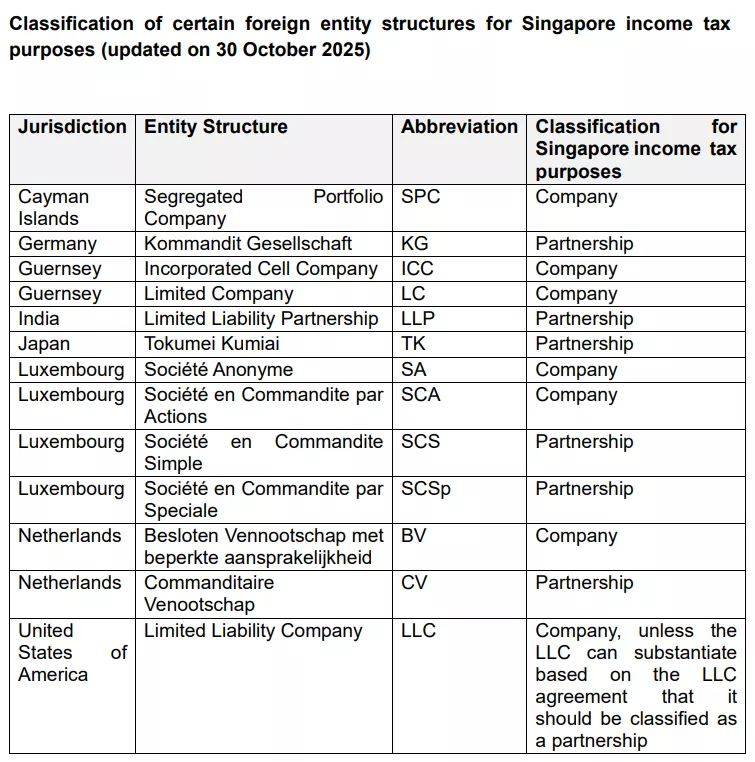
Classification of Foreign Entities for Singapore Income Tax Purposes
Read article
Tax Law Enforcement in Singapore – Procedures, Queries and Limitation Periods
Read articleLooking for an international tax service?
We’re always here to help. Don’t hesitate to get in touch.
Talk to an expert